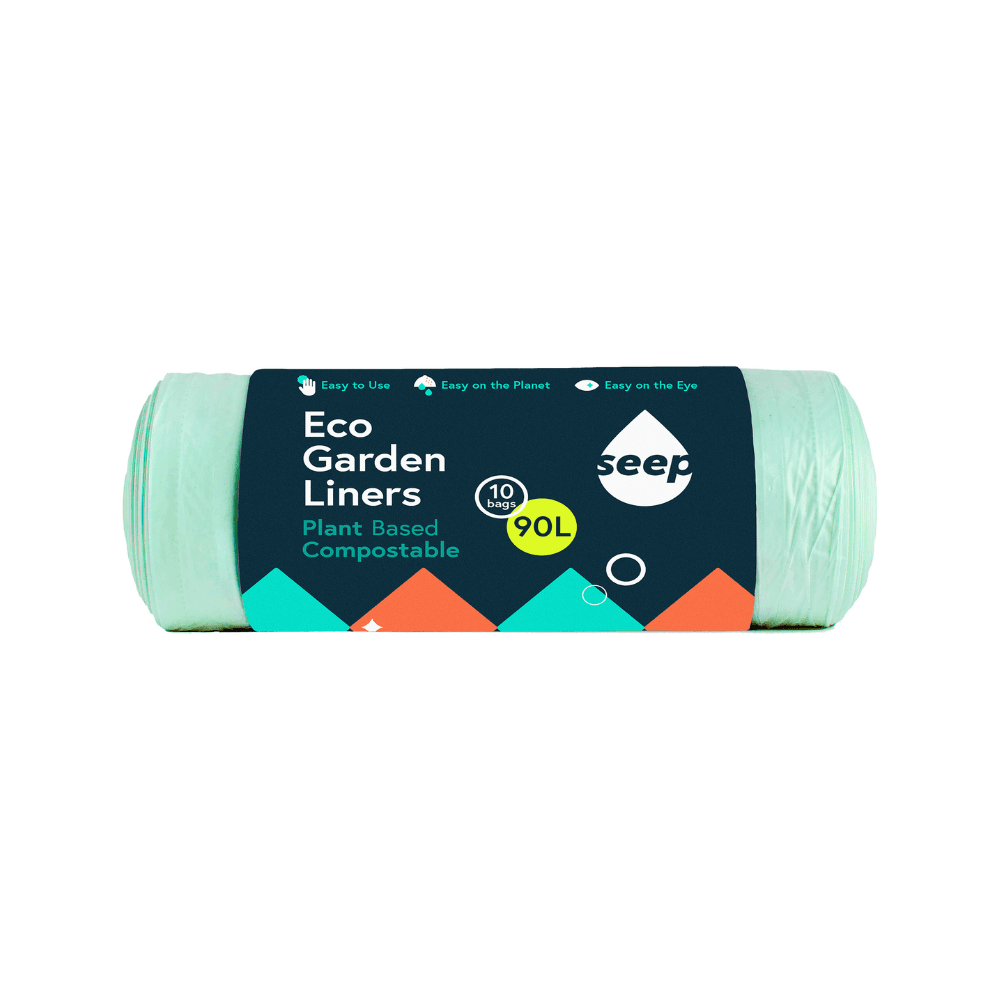
Seep Garden Waste Liners 90L (Roll of 10 Bags)
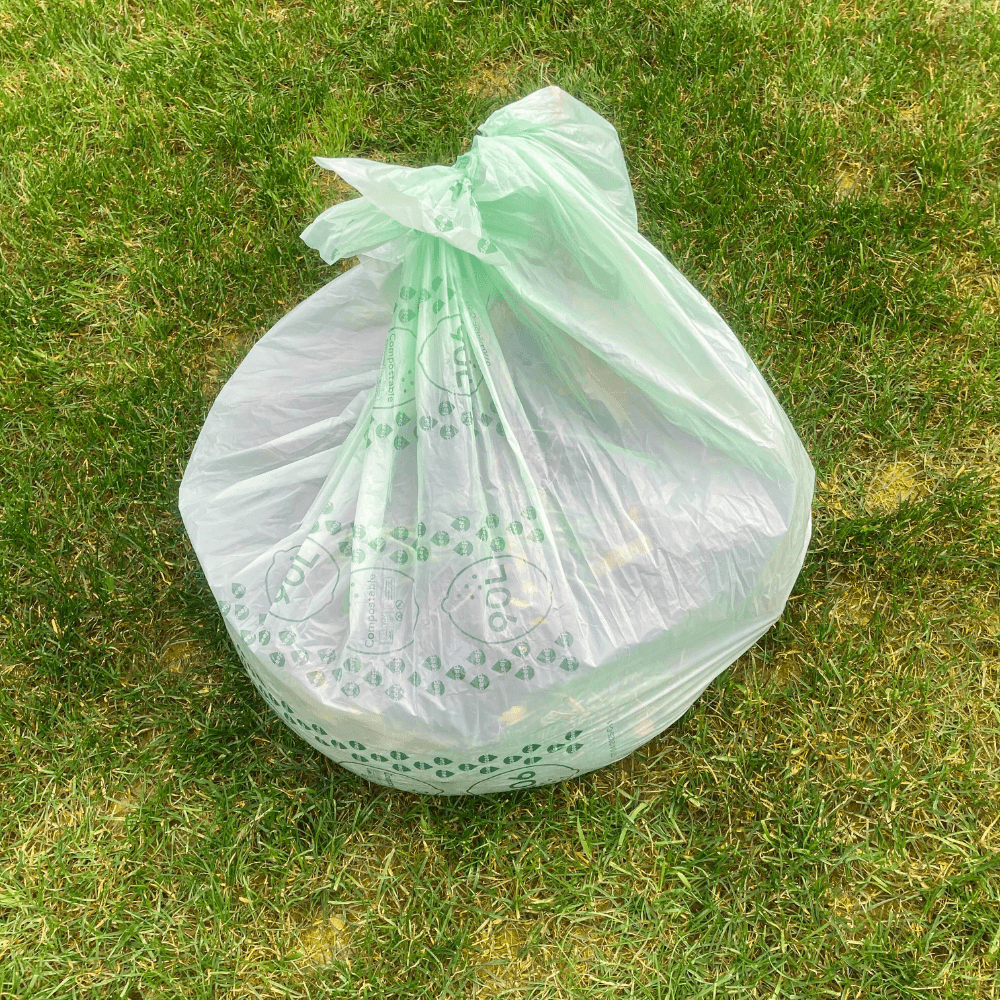
Made from the same material as our trusty bin liner range, we have created liners perfect for clearing garden waste. They are perfect for collecting grass cuttings, wood chippings, plants & weeds from around the garden which can then be easily deposited in the home compost or garden waste bin.
- Made from plant-based bio-polymer Mater Bi™️
- Certified compostable (EN13432 and TUV Compost Home)
- Does not release microplastics into the environment
- All packaging is 100% recyclable

£8.50
Out of stock
Enter your email address and we’ll let you know when it’s back in stock.
You’re on the list
We’ll let you know as soon as Seep Garden Waste Liners 90L (Roll of 10 Bags) is back in stock.
Continue shoppingMade from plant-based bio-polymer Mater Bi
- Store in a cool, dry place & out of direct sunlight
- Shelf life of 12 months (will then start to naturally break down)
- Store your bin liners in a cool, dry place to help prolong their life
Home compost and approved for local authority collection.
- All packaging and leaflets are 100% recyclable
How do I care for my compostable bin liners?
Store our compostable bin liners in a cool, dry place & out of direct sunlight
Shelf life of 12 months (will then start to naturally break down)
Store your bin liners in a cool, dry place to help prolong their life
What are the bin liners made from?
The raw material for our bags is called Mater-Bi, a bioplastic made from corn starch and plant oils. Even the ink printed on our bags is compostable, solvent-free and water based.
Would you be able to make the compostable bag material stronger?
Our compostable liners are made from Mater-Bi, which is one of the strongest biopolymers on the market developed over many years of scientific research. Plant-based, compostable plastics do require more care than oil-based plastic; the liners shouldn’t be overfilled and should be emptied more regularly when coming into contact with food/organic waste. As food/organic waste starts to rot and break down, it causes the liners to start decomposing (proof that they’re doing their job!). For more care information, please check the care instructions above.
Would you be able to have compostable bags with handles?
We won’t be developing compostable bags with handles, since they require more material that we feel isn’t necessary.
Can these be used for a cat litter tray?
Yes – several customers have let us know they use our 10L compostable liners for this purpose. Do note that some substances act as accelerants for the breaking down of the liner (though cat litter shouldn’t be one!).
How long does it take to break down?
As per our home compostability test, the bag will completely break down in 3 months, leaving no microplastics behind. However, certain common materials (particularly food waste, teabags, meat products, hoover dust/animal hair) accelerate the decomposition process, so liners should be replaced much sooner.
The storage conditions of the bags may also affect longevity. Ideally avoid hot and wet conditions. Best if kept out of direct sunlight.
Will the council collect them in my general waste?
Yes – they’re approved for local authority collection by all councils, and our manufacturer supply directly to many already.
I find them a bit thin, why is that and what can I do?
We know that thin compostable bin liners are a problem, so we’ve sourced the highest quality, most sturdy material that still complies with the highest compostability standards. That said they aren’t quite like the plastic versions. Here are some tips to prevent splitting: (1) Store in a cool, dry place – heat speeds up their decomposition (2) avoid putting hot liquids in them, grease/oil, wool/animal products and dust (3) Change your liner more frequently if coming into contact with food waste, particularly meat products – as these start to rot they cause the liners to decompose faster (4) Keep your bin in a cool, dry place to help prolong the life of the liners.
Why do the bin liners have a smell?
The bin liners are a natural product, made from corn-starch. This raw material enables the bin liners to biodegrade.
Why are they more expensive than other compostable bin bags?
(1) Latest generation of bio polymer which breaks down in home composting conditions in less than 3 months
(2) Thicker than cheaper compostable liners so they don’t disintegrate
(3) European sourced with no GMO crops and using renewable energy
(4) Certified home compostable (TUV)
Industrial versus home composting timelines
It depends on the composting facility and what the temperature/humidity levels are.
For Industrial Composting (In Vessel Composting IVC), the temperature can reach 60-70°C – in these circumstances the bags will break down within two weeks.
For Home Composting it always depends on how well the composter is managed (how many times turned or rotated, humidity levels, outside temperature etc.). Higher temps in summer help degradation. If it’s well maintained with a higher temp then 3 months is possible, but it always depends on the quality of the home composting.